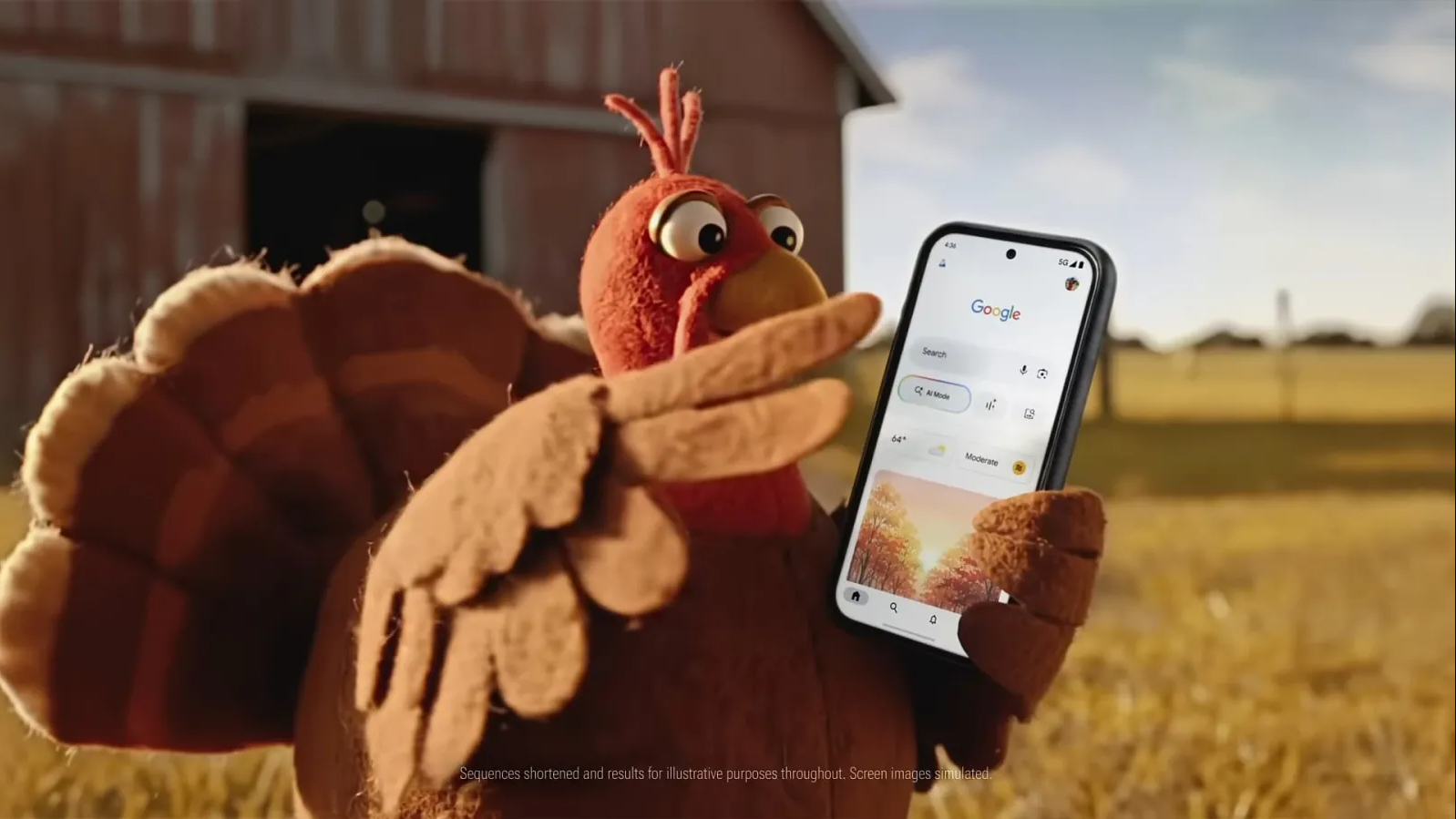
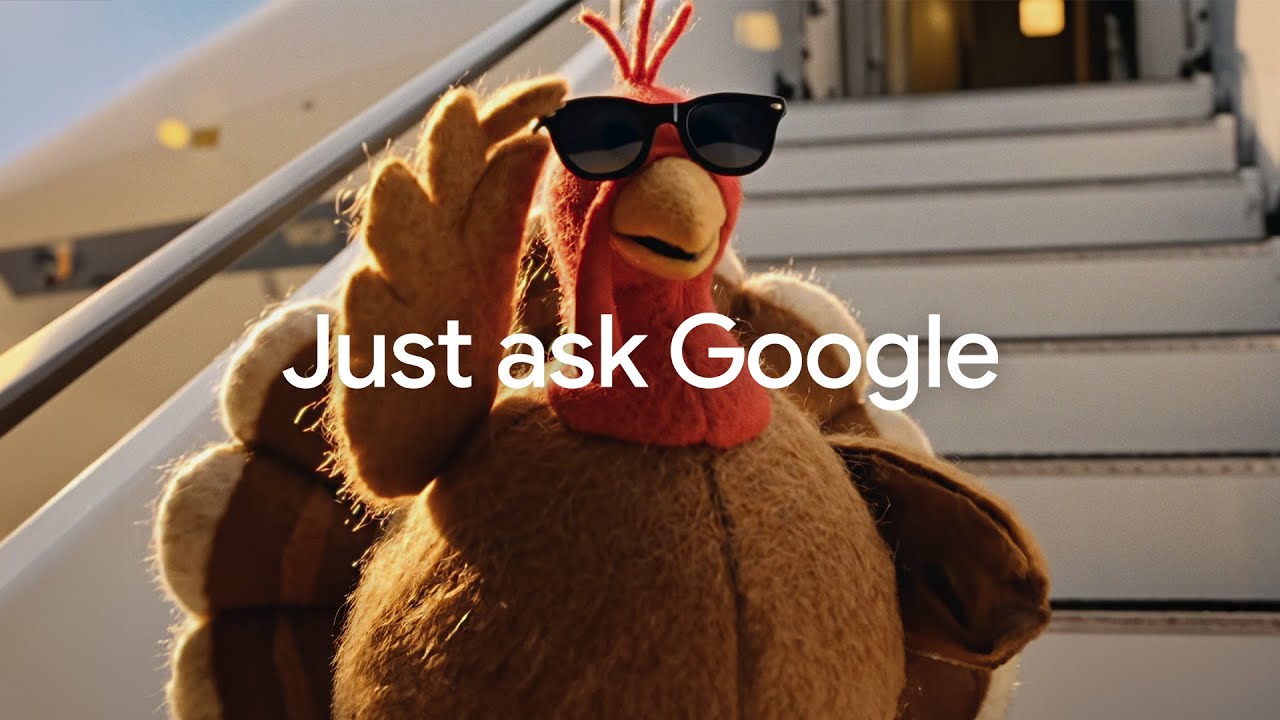
Since the creation of video-generated tools such as Google Veo 3 and OpenAI Sora, the ads produced by AI have been full of Internet, but Google, as a technology provider, has been conservative in this regard and has not gone down in person. However, Google recently released its first full-AI-generated commercial, which tells the story of a furry toy turkey fleeing the farm using Google search ‘ s AI model to reach no Thanksgiving destination. According to Google, the ad will be on the television media today and will be extended to cinema, social and digital media as of Saturday.
Previously, the vitamin brand Ritual, the credit card company Coign and the forecast market start-up company Kalshi used Veo 3 for advertising, with Kalshi ‘ s AI ad landing on YouTube TV during the NBA finals. Robert Wong, co-founder and Vice-President of Google Creative Laboratories, revealed that the company had decided not to highlight the advertisement as being made by Veo 3 or any AI technology. He noted that the marketing community seemed to be “dreaming with AI”, but consumer discrimination did not concern itself with the way advertising was made. He indicated that the creative laboratory had first conceived advertising ideas based on seasonal nostalgia and classical animated special programmes, and then decided to use an AI tool such as Veo 3. In response to criticisms of the “terror valley effect” of the Toys Anti-Dating City, Coca-Cola and other brands, such as the “false but delicately deceptive” ads, Google has not yet tried out in the ads, despite the fact that Google presented a veritable AI creator in the presentation video. Robert Wong emphasized the practical use of the “AI first edition + manual fine-tuning” process: the first version of the advertisement was generated by Veo 3 and the final version was sharpened by real actors, directors and production teams. According to Marvin Chow, Vice President of Google AI and DeepMind Marketing, the “Just Ask Google” series, launched early this year, aims to integrate GoogleAI search functions into product matrices, especially for people who have concerns and even fears about technology.
Robert Wong predicted that AI would not completely replace traditional advertising and understand outside criticism of AI’s “silent” ad, predicting that AI would become a conventional creative tool, like Photoshop. “We are also concerned about the so-called ‘competition for corruption’ and ‘Ai’s indiscriminate phenomenon,” he said, “but it needs to be clear that there are bad ads without AI, and that there are those in the AI era who can stop it.”