
DeepMind in Google has published a very high-profile prototype of the AI study Project Genee., the tool was first exposed last year, supporting users to generate a 3D interactive world that can be freely explored by text tips or uploading pictures. It can also customize roles, perspectives and physical rules.
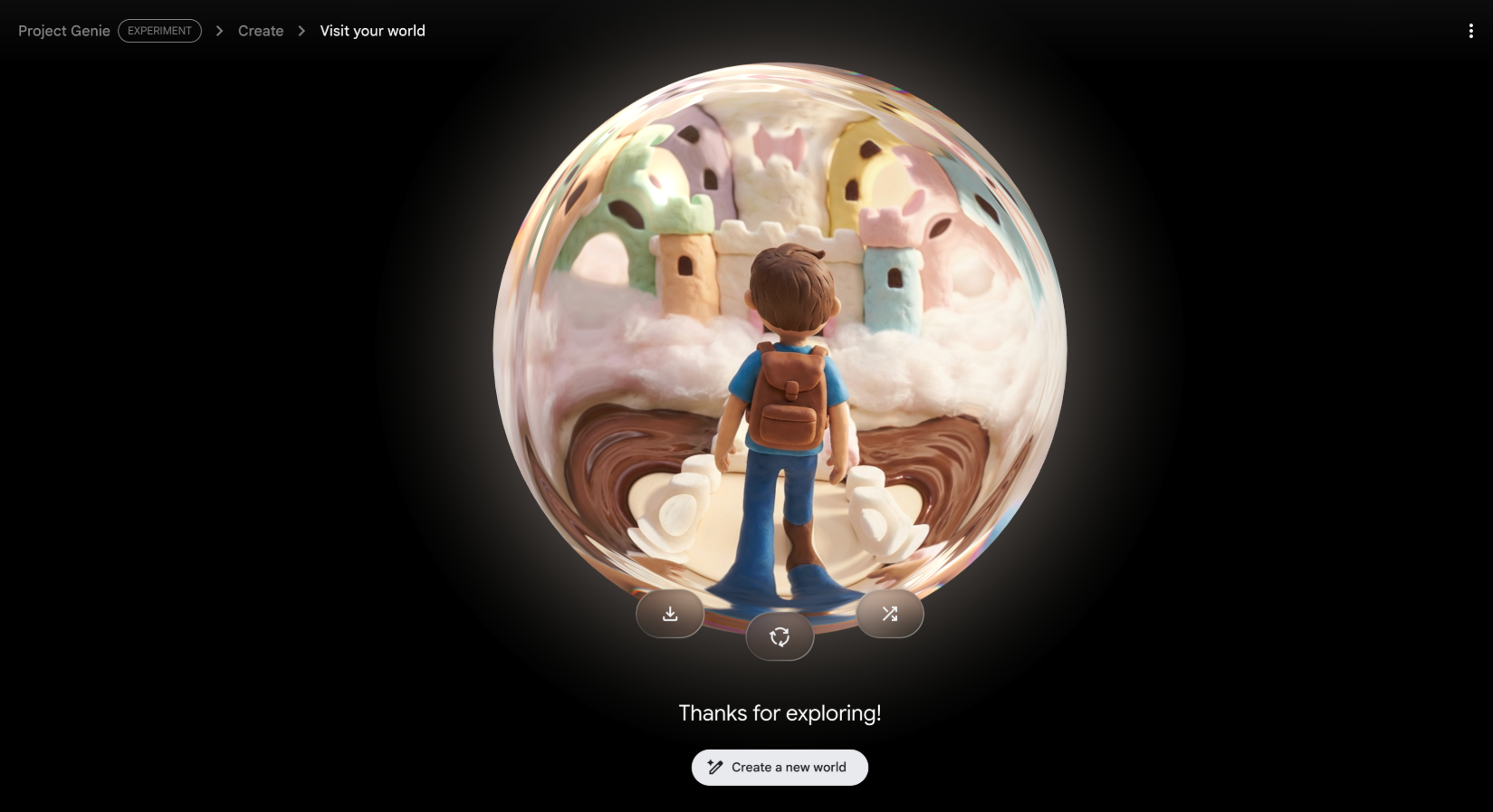
With Project Genie’s release of a technical demonstration, also packaged as “Extension of Human Possibilities”, such as the boulders thrown into a calm lake, a huge wave was unleashed within the capital market and the play industry, triggering a discussion of technological illusions, capital panic and creative value.Technological fantasies cause panic in capital markets. Within 24 hours of Genie’s presentation, capital markets began to sell game-industry shares, and many games and host-sector giants’ stock prices collapsed, and investors reacted with such a dramatic response: According to Investing, by 1 a.m. in Eastern United States time, the GTA-6 issuer, Take-Two Interactive, had fallen by more than 9 per cent; Roblox’s share price had fallen by nearly 12 per cent; the game engine company Unity’s share price had dropped by 20 per cent; and the share price in re-election paradise had fallen by nearly 5 per cent. This “unsatisfactory” collapse seems to point to a common cause: GoogleProject Genee.
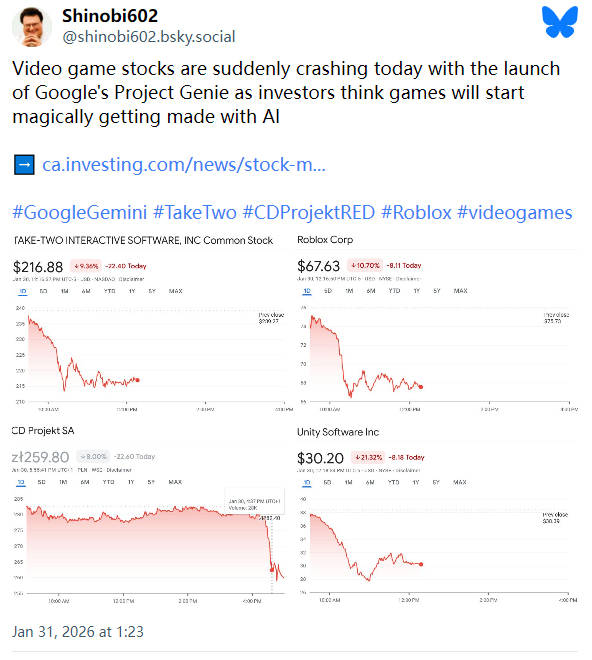
Although Google has repeatedly stressed that this is only a “experimental research model” and is currently open to very few Google AI Ultra subscribers with a monthly fee of up to $250, the capital market has shown an excessive anxiety about the “subversive future”. Investors seem to see an era of “automated game generation” that does not require large development teams, engine authorization fees and long production cycles.The reality of the bones hidden in the tide. The “frightful” market contrasts with the real AI technical barriers. The so-called “interactive world” created by the project Genie is very restrictive: The experience is locked to death in 60 seconds, with an output ceiling of only 720p/24 frames, and with a disordered physical rules and a very poor scenery stability.
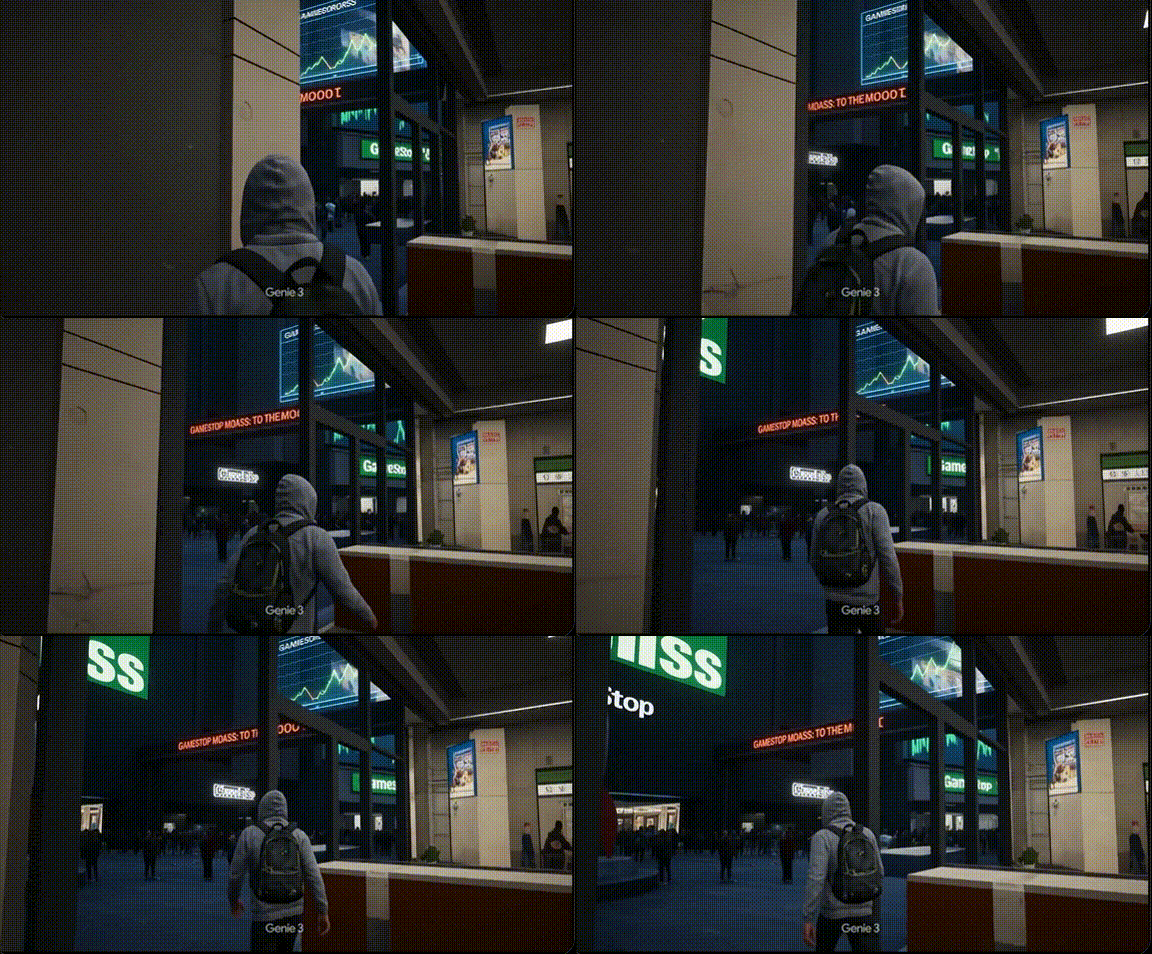
The Verge, the United States technology media, has experienced the creation of a world that has been sorely assessed as a “bad-quality paradise” and has pointed out that one of the raced-demo tracks would be artificially deformed. The developer, Rami Ismail, said: “Remember to copy [email protected] (Mailbox of the Ministry of the Law of Nintendo).” More dramaticly, when The Verge journalist tried to recreate Super Mario 64, the AI tool interrupted its request for “considering the interests of third-party content providers” and appeared to trigger Project Genie’s sensitive copyright nerve. Legal experts warned that such tools, which allow users to generate copyright-protected IPs (e.g. Mario, Disney, etc.) in the absence of clear training of data sources and authorizations, would be tantamount to walking on the edge of the legal grey area and would inevitably attract strong resistance from copyright owners. Industry disputes associated with the penetration of AI technology The background to Project Genee’s release is the continued rise in resistance of game developers to AI applications.A recent game developer’s survey shows that there is a lack of information about the situation.More than half of the respondents felt that the generation of AI had a negative impact on the industry, and the opposition to creative jobs such as visual art and narrative design was particularly strong. Faced with the fear that “AI will replace developers”, AI advocates argue that such an AI tool should be a “tool” in the hands of creators to stimulate inspiration, rapid prototypes, and not a substitute for human creativity. However, even if all the controversy is left aside, assuming that Project Genie is a perfect tool, a fundamental question remains: as a player, do you really want to use it?
It also led to thinking about the nature of the game: would we have moved for the scene and the story if we knew that the content on the screen lacked the temperature of human feelings? When the freshness fades, will it be boring to keep asking AI to produce stories? Just as we can’t replace musicians with an AI synthesizer, so can the game industry. Perhaps the more realistic future is not that AI is a complete substitute for human creation, but, as many supporters have said, a tool for human creators to expand their possibilities. Even so, a new dilemma remains. Human input is so small compared to the big output of the AI data centre. Can we really accept a machine-driven creative process? Concluding remarks The storm triggered by Google Project Genee’s demonstration was essentially a market-driven preview of future narratives. The market exaggerates the ability of current technologies to destabilize a complex, systematic, human-centred game industry, but it is also a true reflection of the eternal quest for “downside efficiency”. However, the game has never been inspired by the creation of a three-dimensional space, but rather by its fine design of rules, moving emotional narratives, stable interactive feedback and the irreplaceable nature of creative sparks. Great entertainment works are ultimately about human art, not the magic of arithmetic.