
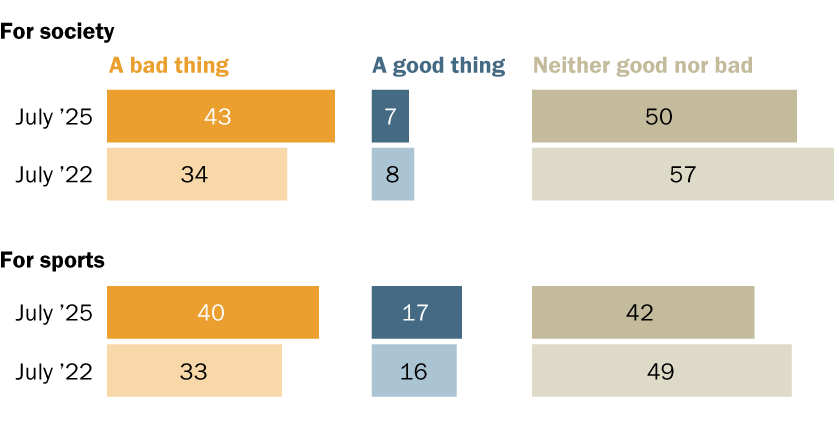
According to Harvard University, since the United States Supreme Court overthrew the federal sports lottery ban seven years ago, the perception of sports fairs is becoming increasingly negative in the United States as a result of personal and social cost concerns arising from the surge in online investment. According to a recent poll by the Pew Research Centre, 43 per cent of adults in the United States consider the legalization of sports games in most states to be socially harmful, up from 34 per cent in 2022.
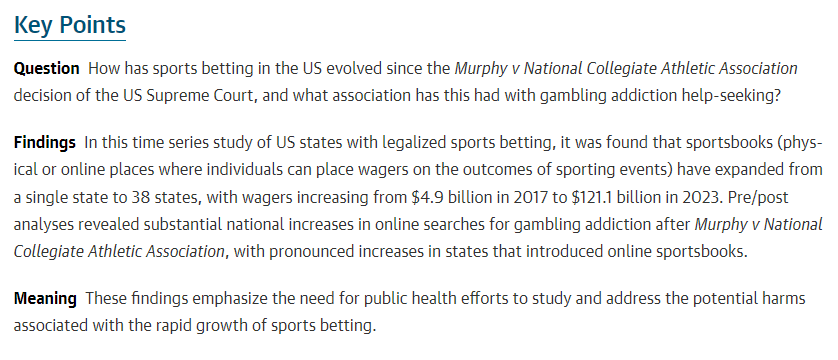
According to Harvard University experts, gambling addiction is increasingly becoming a public health hazard and may trigger a broader economic chain reaction. The psychologist reported that the number of problem gambling patients continued to increase, while a study by the American Medical Association’s Internal Science Journal in February 2025 showed that the number of gambling addiction search networks in the United States had increased by 23 per cent from the Supreme Court ruling in 2018 to June 2024. “The emergence of new forms of gambling has led to a decline in the savings rate, with an increase in credit card and mortgage default rates. These are long-term financial and social costs with wide implications, as indicated by Malcolm Sparrow, Professor of Public Management Practice, Harvard Kennedy School of Government. His research focused on social risk regulation, including gambling. The United States Sports Lottery Gate was opened when the Supreme Court ruled in 2018 to devolve control over sports lottery to the states. Currently, 39 states have adopted legislation to legalize various forms of sporting lottery. A study by the American Medical Association found that the total number of sports investments rose from $4.9 billion in 2017 to $121.1 billion in 2023, of which 94 per cent was completed online in 2023.
Malcolm Sparo notes that “it usually takes five to seven years for the cantons to become more painfully aware of the damage to public health and finances caused by the accessibility of gambling”. Legitimation initially resulted from the willingness of the state government to create alternative taxes, but experts indicated that the sports lottery lobbyers had diluted the addiction. Spencer Andrews, a student researcher at the Petri-Flom Center at Harvard University, has been a researcher for several years at the National Institute of Health in the United States, where he has analysed the risks of sporting lottery in a series of articles written by the Health Act Blog. “To legalize it seemed reasonable, welcome and profitable at the time”, Spencer Andrews said, “but it now appears that this is short-sighted decision-making, whose proliferation is clearly out of control”.
Spence Andrews, in a series of articles, highlighted the psychological mechanisms of the ease of sports games that lead to addiction: “The mobile phone is the place where notices are sent and advertising continues to `brush’ the brain, and the journey to and from the casinos in the past constitutes a barrier in itself.” Debi Laplante, Associate Professor of Psychiatry at Harvard School of Medicine, Director of Research on Addictions at the Cambridge Health Alliance, argued that clinical doctors may have difficulty in identifying and dealing with the negative behaviour of sports games because most people have limited experience. She said: “Many health-care providers lack the relevant knowledge, skills or tools, and sometimes people are unaware that gambling is causing problems.” Malcolm Sparo added that studies have shown that even mild participation in sports games can be harmful: “We suspect that up to 50 per cent of gamblers have some degree of harm and regret. The broader definition considers that gambling has had a negative impact on their lives and that they have tried to stop gambling but have failed. Although this does not meet the diagnostic criteria of problem gamblers, it nevertheless means lasting damage to certain aspects of life.”
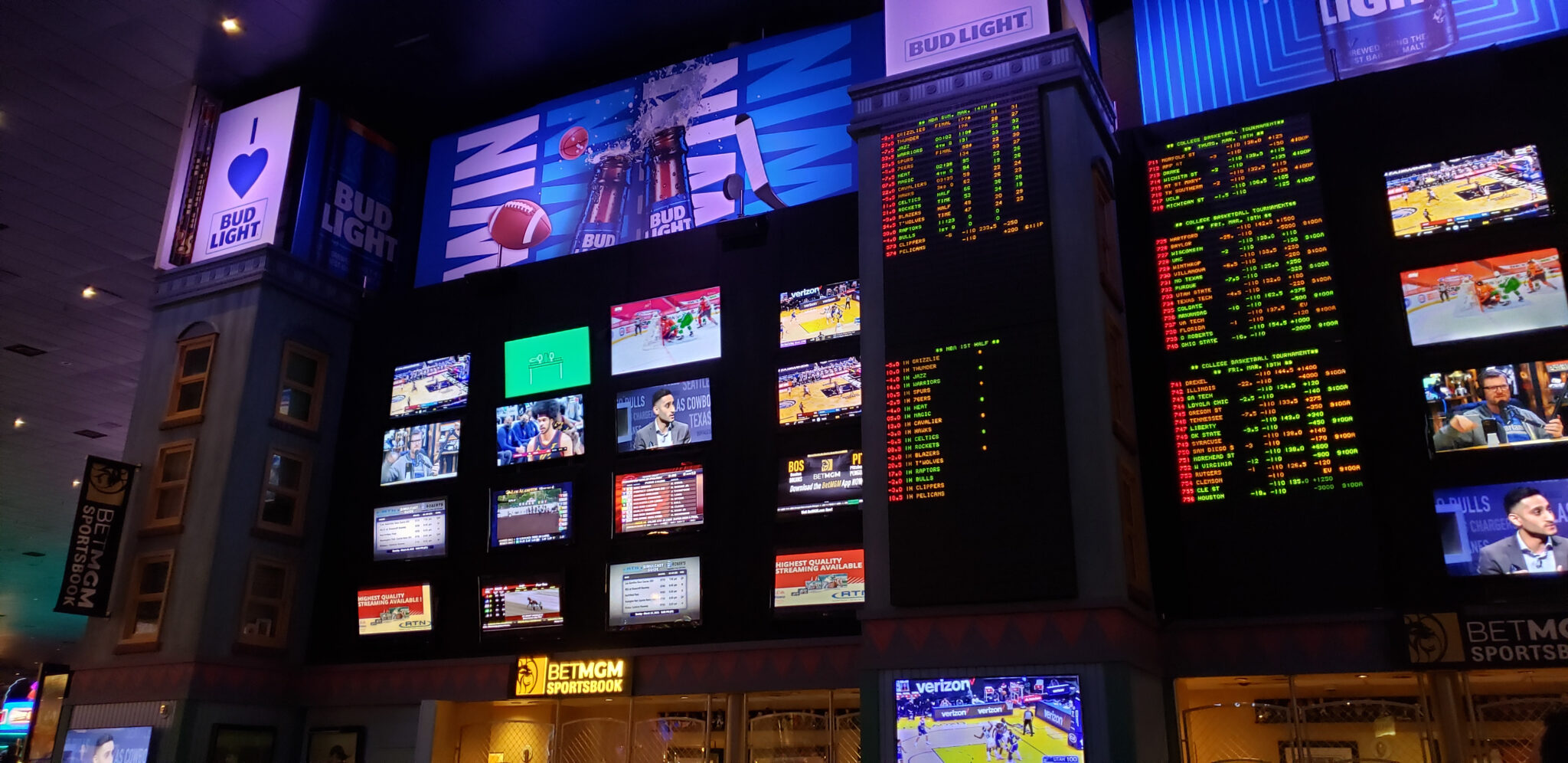
In recent years, some protection measures have been put in place: some sports lottery applications allow users to set loss limits, and almost all sports lottery advertisements in the United States include addiction help lines. Spencer Andrews suggested a ban on advertising during sporting events: “It’s like a cigarette brand advertising at a smokers’ convention, it’s a cheat code. It is the responsibility of Governments to protect consumers from being misled by private interests.” Malcolm Sparo points out that another strategy is for states that have not yet done so to remain firm: “The industry wants us to believe that 50 states will eventually let go. But in the debate on legitimization policies, economic benefits are seriously exaggerated — a deliberate strategy of the industry.” When money is running ahead of society, behind the fences that have been pushed down, new social crisis walls are being built.