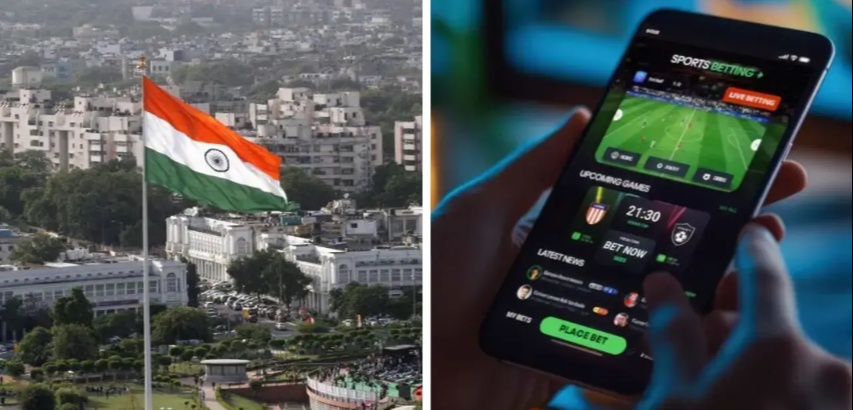
According to a recent survey by CUTS International, a public policy think tank, the proportion of Indian users of the off-shore gaming platform has risen from 68.3 per cent to 82 per cent since the implementation of the Indian Online Game Promotion and Regulation Act 2025 (PROGA) on 1 October 2010, as a result of the total ban on genuine gold games.

The study investigated 1,000 genuine gold game players in Delhi, India, and analysed changes in players ‘ behaviour, including platform selection, consumption and length of use, before and after the ban was imposed. The results show that, in the absence of a regulated in-country platform, there is a clear trend of overall migration of users to offshore sites. CUTS International Senior Fellow Sohom Banerjee, in an interview with SiMGA, said: “The survey revealed that users had participated in the gold game before the ban was issued, including domestic and offshore platforms. What really changes is the distribution of the platform they place and consume, not necessarily their overall interest in the game.” Sohom Banaki explained that many of the users who had previously allocated expenditures between domestic and offshore platforms may now have shifted their entire budget abroad: “If a user had spent 5,000 rupees on a regulated domestic genuine gold platform and invested the same amount on an offshore platform, once the domestic platform had been shut down, the 10,000 rupees might now have been fully used on an offshore platform.” The survey also revealed a significant increase in the level of offshore expenditure. Before the ban, only about 7.6% of users spent between Rs. 5000 and Rs. 10,000 per month; after the ban, the percentage increased to 26.2%. In addition, 13.5 per cent of users spent more than Rs. 10,000, whereas almost no one had reached that level before.

Sohom Banaki added that many interviewees referred to the actual reasons for the shift to an offshore platform, including familiar payment patterns, low thresholds and suggestions from friends. “The interviewees mentioned that familiar access routes, UPI or bank transfer payments, as well as attractive promotional activities, make offshore platforms convenient alternatives in the absence of domestic options.” He said. The survey also revealed a significant increase in the frequency of user use and the length of each use. The proportion of visits per day increased sharply from 3.4 per cent to 42 per cent, and from 3.4 per cent to 44 per cent for single use of more than two hours. This reflects the fact that users are not only moving but also increasing their use. Indian business lawyer Divya Sharma stated: “With no new law and international cooperation, Indian regulatory power cannot reach overseas operators.” This trend poses serious legal and regulatory challenges, and current Indian law lacks clear regulation of offshore operators and makes it difficult to enforce consumer protection or licensing. It is difficult for regulators to pursue responsibility for offshore platforms that circumvent India’s anti-money laundering and “KYC” requirements and remain operational through virtual networks or mirror domain names. In her view, effective regulation of offshore platforms required India to enact laws with extraterritorial effects, sign international cooperation agreements and establish central regulatory bodies, none of which currently existed. The industry analyst Japneet Singh Sethi stressed the impact of the ban on the Indian game ecology. While demand remains strong, many small skill playing platforms have lost development opportunities and tax contributions. He said: “This decision has indeed shattered the dream of many Indian investors to create a unique enterprise.”
Pnut Singh Sessi noted that the ban also affected related industries, such as union marketing, media, cyberred and sponsors, which resulted in many companies being laid off. In his view, the offshore market would continue to grow without a clear regulatory framework, but in a fragmented and underground pattern. “It is a fact that offshore markets continue to expand and that, even in a grey market environment, demand does not decline in half a year or a year.” He suggested that India could either follow the British or European Union model of regulation or try a pre-regional regulatory programme. At the same time, he stressed the need to restore the regulated system: “Governments, if fully re-engineered, would not only ensure that operators were registered, but would also generate new revenue through licences and taxes.” The survey concluded with a reminder that there was a risk of users moving to unsupervised offshore platforms. Sohom Banaki noted that such platforms were not subject to the Indian consumer protection framework, and that there were limited avenues for players to defend their rights in late presentation or disputes. At the same time, the report found an increase in the frequency and duration of use of some users, which could lead to excessive gambling risks. He called on policy makers to continue to advance balanced and evidence-based policy discussions: “Consumer rights must be protected, while avoiding the need for user behaviour to be forced to shift to areas where regulation is weaker”.